AI & Agentic Automation
Applied AI, LLM pipelines, and agentic workflows that accelerate enterprise decisions.
- Agentic workflows
- LLM pipelines
- Model governance
Your AI-first technology partner
Where agentic AI meets healthcare & pharma modernization and cyber defense, engineered together to accelerate outcomes with security you can prove.
Provable Security
24/7 SOC operations with a posture you can prove.
Autonomous agents that move enterprise work from insight to action.
Regulated Velocity
GxPGxP-aligned platforms built for regulated velocity.
Trusted by industry leaders worldwide
Secure Traces delivers cybersecurity at the core of everything we build-but we don't stop there. We provide secure cloud, Oracle, and enterprise IT solutions that help organizations protect critical systems, modernize operations, and respond decisively to real-world threats.
Driven by actionable threat intelligence and hands-on delivery experience, our solutions are practical, scalable, and designed to work in the environments businesses actually run.

Real-world attack research backed by proven defensive execution
Expert-led SOC, threat hunting, and risk management
Secure, scalable technology solutions without enterprise-level complexity or cost
Book a no-obligation consultation. Our team will map your priorities to a practical roadmap across AI, healthcare, and cyber.
Our mission is to deliver secure, scalable technology that protects organizations, modernizes operations, and enables confident growth. Through research-driven cybersecurity and enterprise IT solutions-including cloud and Oracle platforms-we help organizations of all sizes reduce risk without unnecessary complexity or cost.
Protect
Reduce risk with research-driven defense.
Modernize
Cloud and Oracle platforms, done right.
Accelerate
Move faster with AI-first operations.
A proven four-step delivery model that turns strategy into measurable outcomes - engineered to compound value at every phase.
Understand your environment, risks, and goals.
Build a tailored roadmap aligned to your business.
Deploy, integrate, and maintain with precision.
Continuously improve and respond to change.
Numbers that reflect a decade of engineering discipline across our three focus areas.
Serving global enterprises
From automation to insight
HIPAA · GxP aligned
Three focus areas, one AI-first delivery model - built to accelerate the modern enterprise from strategy to production.
Applied AI, LLM pipelines, and agentic workflows that accelerate enterprise decisions.
AI-driven clinical, pharmacy, and payer platforms - compliant, scalable, and outcome-focused.
Autonomous SOC, threat research, and defense engineering to keep the enterprise secure.
From agentic AI pilots to 24/7 SOC operations, every engagement is scoped to your risk profile, compliance needs, and growth goals.
Security-first solutions across cloud, enterprise IT, and critical platforms-built to scale, built to last.
Relentless protection and operational stability, 24/7
Secure cloud, Oracle, and enterprise platforms-built to scale with confidence
SERVICES
Led by AI and anchored by Healthcare and Cybersecurity - every practice is built for operational precision.
Accelerate innovation and scalable decision-making with custom AI models, agentic automation, and secure ML pipelines built for the enterprise.

AI-powered, compliant clinical and pharmacy technology - engineered for HIPAA, GxP, and modern healthcare workflows.

Proactive defense, intelligent threat detection, and resilient protection - keeping your organization secure across every layer of the modern enterprise.

Oracle Fusion Cloud ERP and custom-built enterprise applications - implemented, integrated, and supported to run the business end to end.

Secure industrial environments and minimize operational risk with dedicated OT SOC monitoring across SCADA, ICS, and field systems.

Drive efficiency with data-driven underwriting, optimized claims processing, and modernized core insurance platforms.

Align specialized AI, cybersecurity, and technology talent with your business needs through flexible engagement models.

PLATFORM PILLARS
Agentic AI, Healthcare & Pharma, and Cyber Defense - engineered together so enterprises can modernize faster, operate smarter, and stay resilient by design.
Explore the platform
TRUSTED CLIENTS
Advanced cybersecurity, AI, and technology solutions designed to protect your organization while enabling innovation, digital transformation, and sustainable growth.
Leading Pharmaceuticals claims processing company CIO
Client
Secure Traces showcased strong pharma expertise through a secure, well-designed architecture aligned with our regulatory needs. Their technical approach gave us confidence in both compliance and long-term resilience.
INSIGHTS

Apr 12, 2026
AI agents are only as powerful as the tools they can reach. Here's how to govern agentic connectivity at scale.

Feb 23, 2026
From valuable patient data to vulnerable medical devices, here's what makes the sector so attractive to cybercriminals.
Mar 18, 2026
AI is no longer an emerging technology - it is now central to enterprise risk and resilience.
Jan 2, 2026
In today's digital landscape, small and mid-size organizations face an...
Our trusted partners deliver advanced cybersecurity and technology expertise, empowering organizations to establish resilient digital frameworks while enabling proactive, AI-driven defense strategies.
EXPERTISE MEETS ACCREDITATION

ISO 9001
Certified

ISO/IEC 20000
Certified
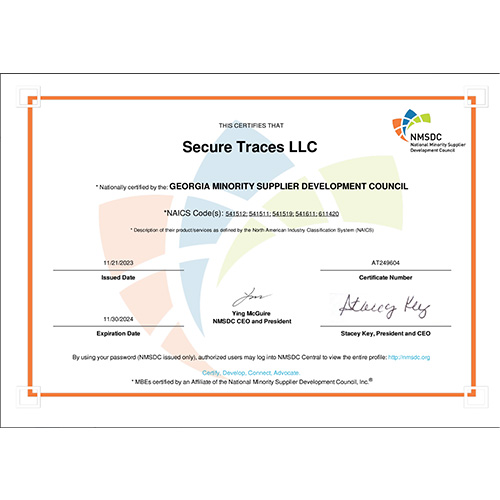
NMSDC Certified
Certified
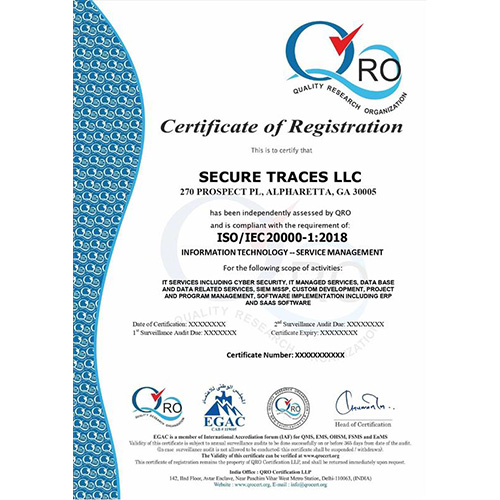
ISO/IEC 20000-1:2018
Certified
FAQ
Quick answers about Secure Traces, our industries, certifications, and how engagements start.